All eight Lorcana rarities, in order
Common → Uncommon → Rare → Super Rare → Legendary → Epic → Enchanted → Iconic. This is the rarity hierarchy, not a price ranking or a guarantee about a specific card’s pull rate.
Look near the bottom of the card for the rarity symbol. Use these official illustrated examples to compare the actual shapes; the six ink colours are a different system.
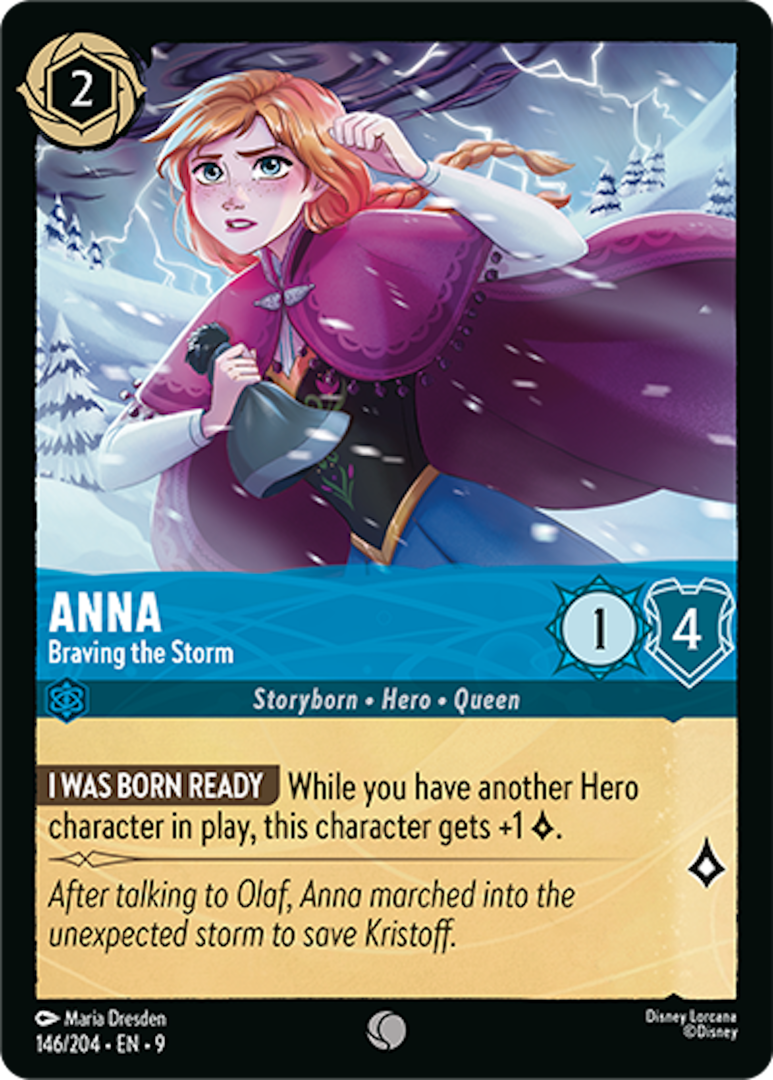
Rarity symbol enlarged
1. Common
The first rarity tier. A foil Common remains a Common.
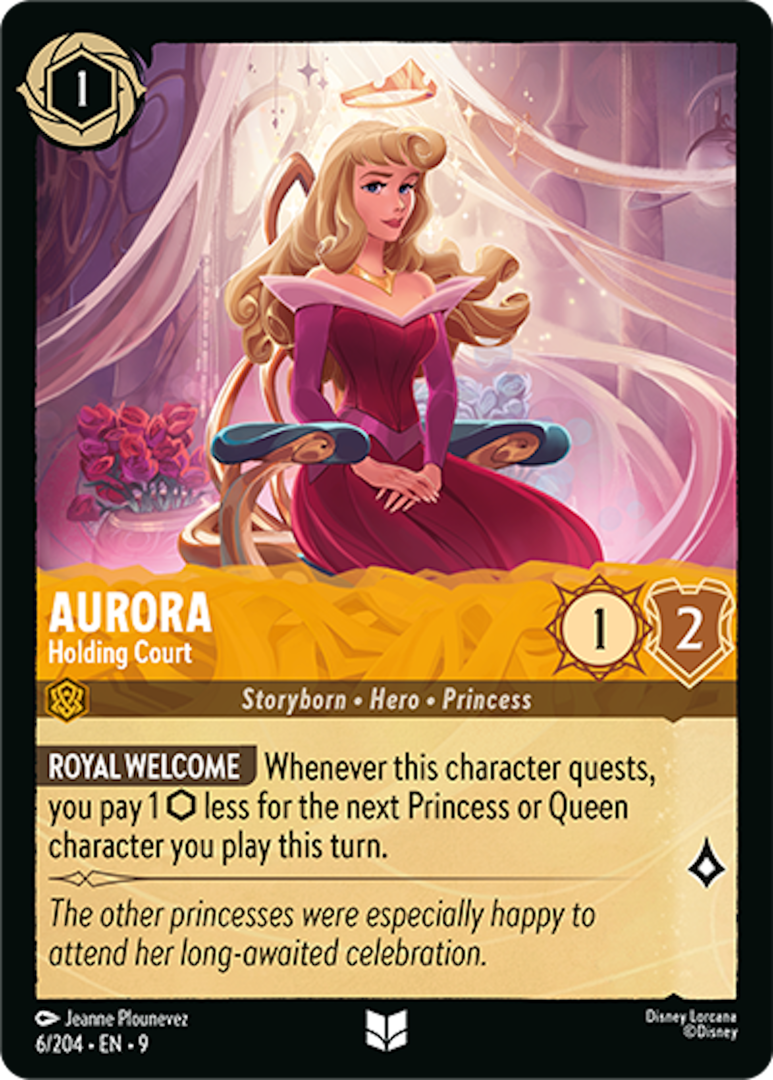
Rarity symbol enlarged
2. Uncommon
A separate symbol from Common; the finish does not change this rarity.
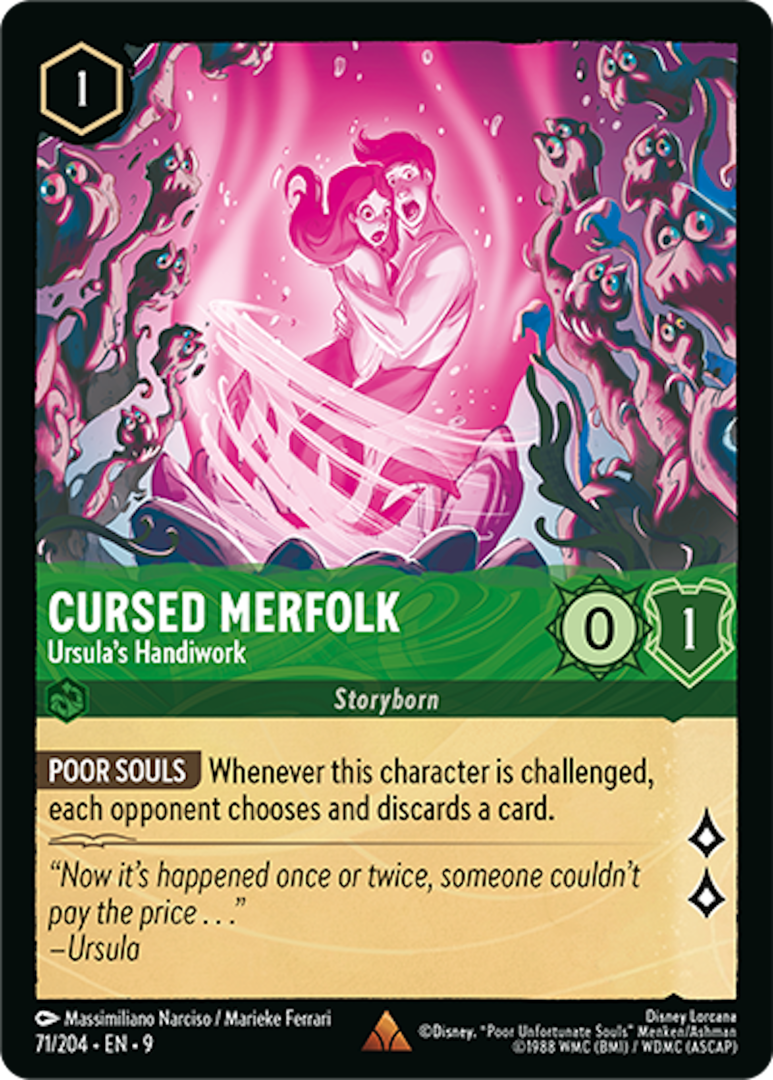
Rarity symbol enlarged
3. Rare
Read the printed symbol, rather than treating ‘rare’ in a listing title as proof.
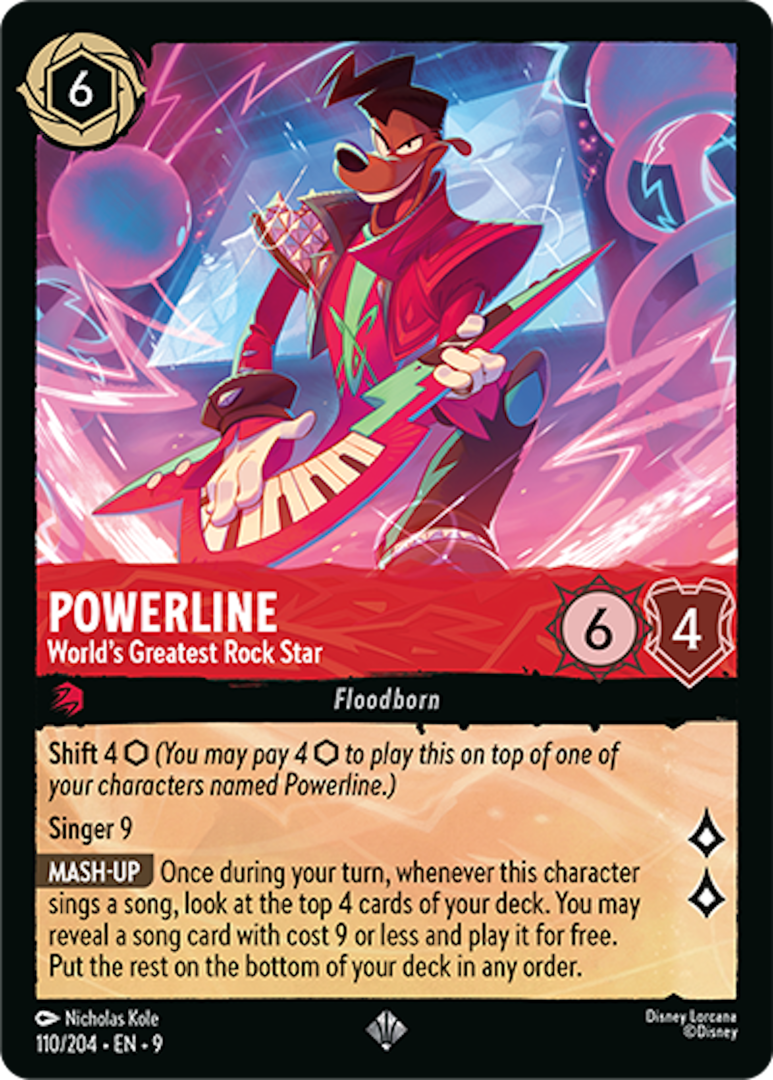
Rarity symbol enlarged
4. Super Rare
A distinct tier above Rare. Normal and cold-foil versions can share the same artwork.
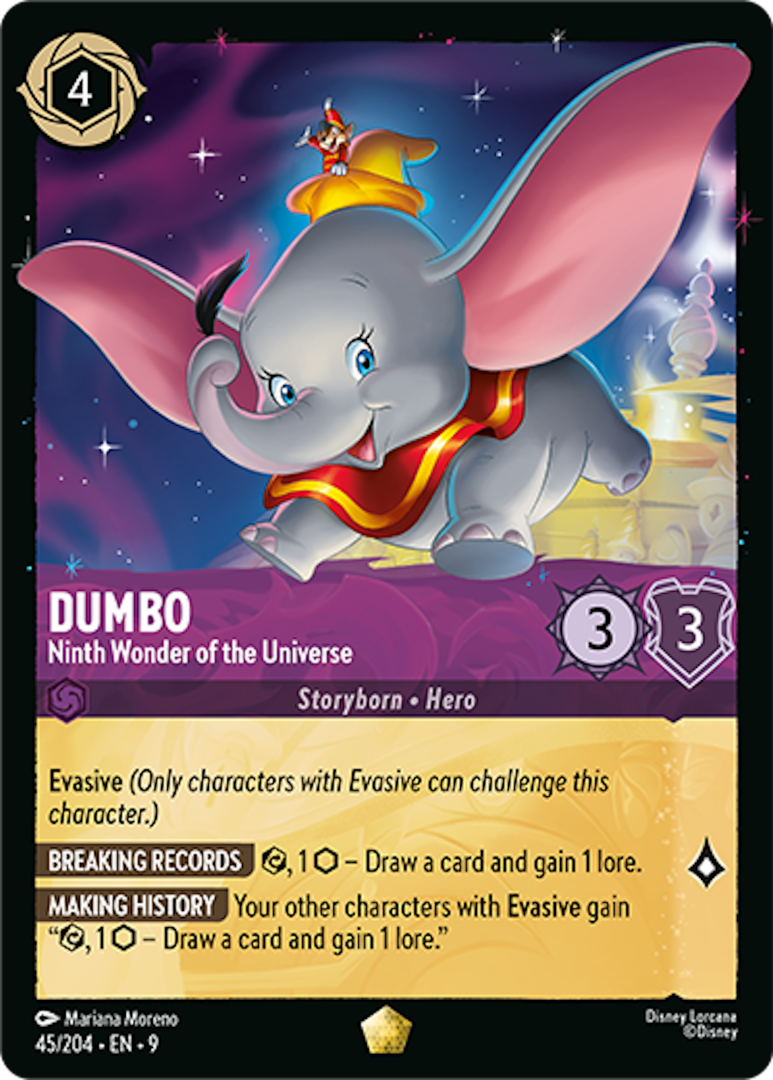
Rarity symbol enlarged
5. Legendary
Above Super Rare, below Epic in the expanded rarity order.
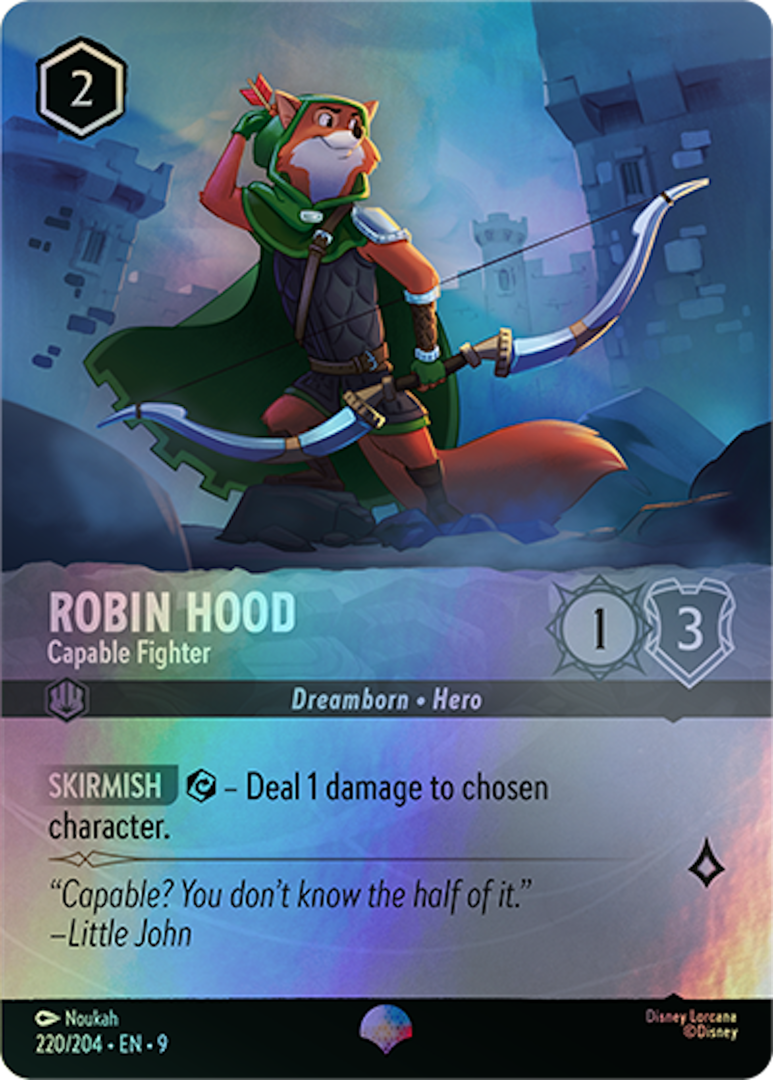
Rarity symbol enlarged
6. Epic
Introduced in Fabled. Frame-extending art, rainbow foil, holographic symbols and tinted text.
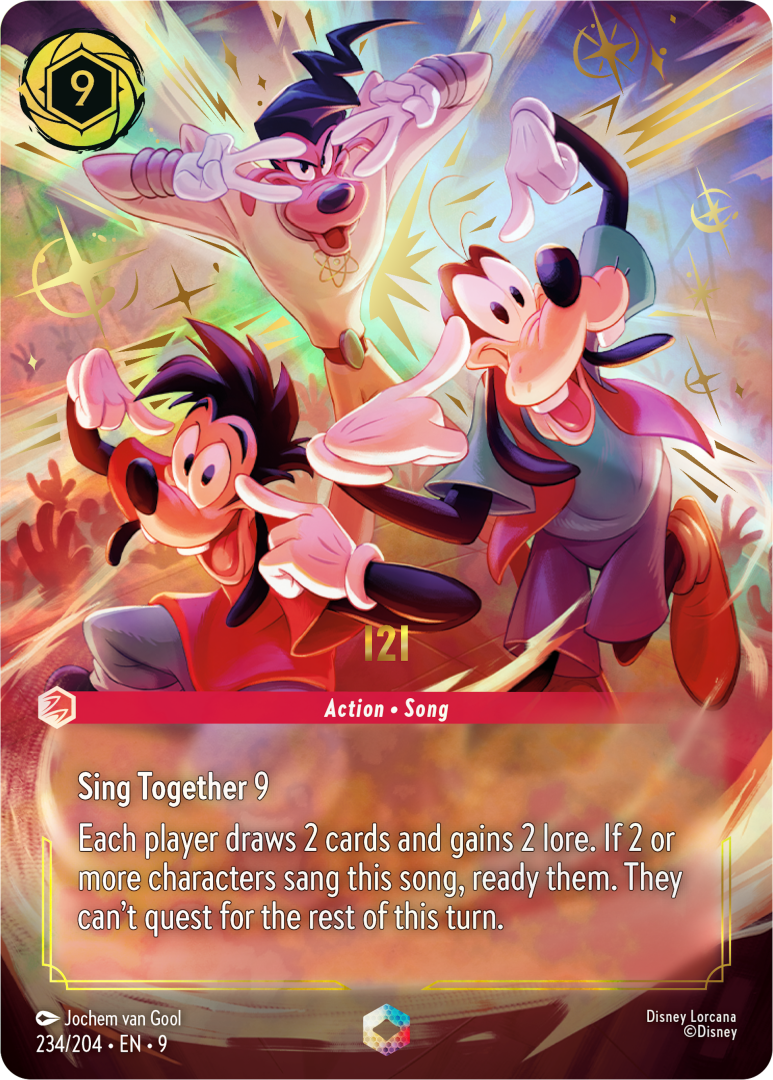
Rarity symbol enlarged
7. Enchanted
A separate alternate-art rarity. Visual styles vary between sets; use the printed symbol.
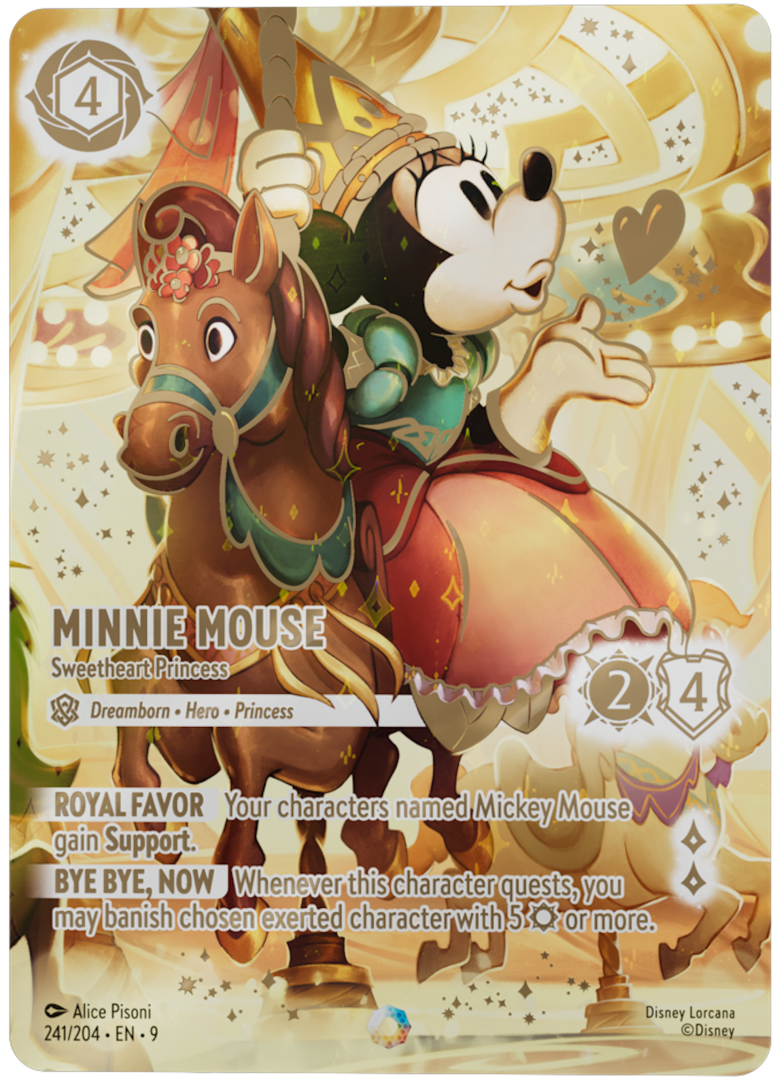
Rarity symbol enlarged
8. Iconic
Introduced in Fabled above Enchanted, with lore-star foil and dimensional hot stamping.
Illustrated card examples: Disney Parks Blog / Disney Lorcana. © Disney. Static artwork cannot prove a physical card’s foil or authenticity.
Normal versus cold foil: finish is separate from rarity
A normal card has no foil finish. A cold-foil version adds a reflective treatment to the same printing; its name, rules and rarity can remain unchanged. A cold-foil Legendary is still Legendary. It does not become Enchanted because it shines.
| What you are comparing | What to match | Checklist treatment |
|---|---|---|
| Normal and cold foil of one printing | Same set, collector number, artwork and rarity; different finish | One gallery tile, separate finish rows |
| Standard and Enchanted artwork | Different artwork, rarity symbol and collector number | Separate printing entries |
| Booster card and event promo | Event mark, promotional numbering, artwork and exact finish | Separate promo printing where catalogued |
Special products can use finishes described as satin, glitter, glimmer or other treatments. Those words describe the printing’s appearance; they are not extra tiers in the eight-rarity ladder. A marketplace’s “Holofoil” label may also be less specific than the product’s official finish description.
Identify a card in four checks
- Read the full name and subtitle. Elsa – Snow Queen and Elsa – Spirit of Winter are different cards.
- Match the set and complete number. The same name can reappear in later sets and promotions. For The First Chapter, the base checklist ends at 204 and Enchanteds run beyond it; do not assume that 204 is a universal cutoff for all releases.
- Compare the rarity symbol and artwork. Borderless art alone does not distinguish Epic, Enchanted, Iconic and every promo.
- Check the physical finish. Ask for clear front/back pictures and a gently angled photo under light. A stock image often represents both normal and foil listings.
Common rarity questions
Is Enchanted still the highest rarity?
No. Iconic was introduced with Fabled on 29 August 2025 and sits above Enchanted. Epic arrived in the same release, between Legendary and Enchanted. Older guides written for the original six-rarity system may not include them.
Does every card have a normal and foil version?
Do not assume so. The First Chapter’s 204 standard cards were offered in normal and foil, but that is not a rule for every special rarity, promo or fixed product. Use the exact printing’s listed finishes and product evidence.
Does a symbol tell me the card’s value?
It identifies rarity, not a sale price. Character demand, artwork, condition, release and distribution can change values. Compare the same raw printing and finish, keeping graded prices separate.
Can these pictures confirm a card is genuine?
No. They help identify the intended printing. Counterfeits can imitate artwork and symbols; evaluate the physical card and the seller rather than treating one visual feature as authentication.